About This Resource
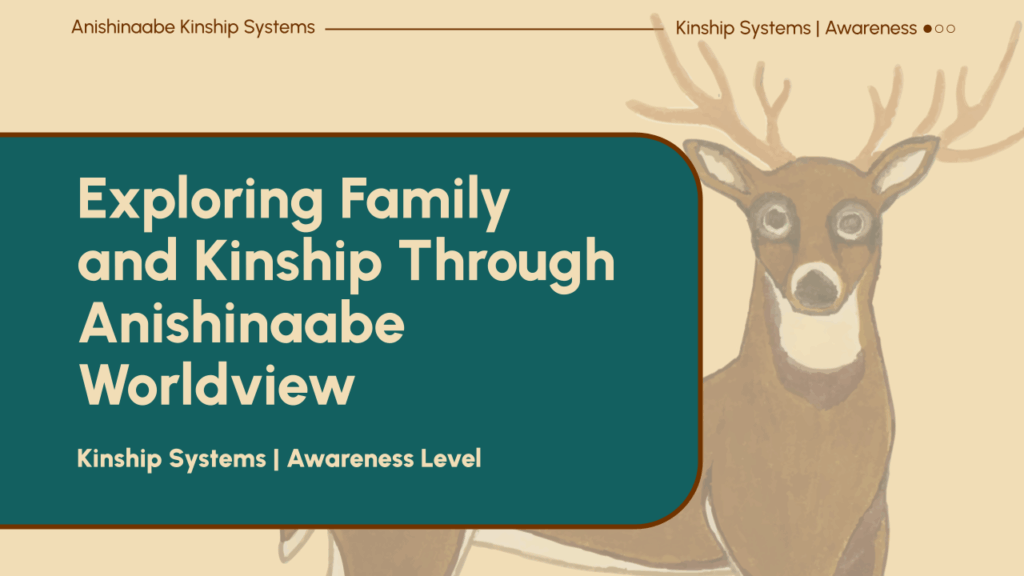
This awareness-level lesson introduces students to how Anishinaabe people understand family beyond biological connections, emphasizing shared experiences and clan structures to strengthen relationships and community well-being.
Student Organization
Whole Class or Small Groups
Materials Needed
Writing tools: pencils, markers, colored pencils or crayons.
Time Required
1 hour, 20 minutes – 1 hour, 45 minutes
Learners will…
- Be able to identify the way in which many Anishinaabe people value family and community.
- Be able to recognize that family can include people beyond biological connections.
- Be able to notice how Anishinaabe relationships strengthen community well-being and appreciate the importance of caring for one another.
Essential Questions
- What can we learn from Anishinaabe ways of defining family that can help us build stronger & kinder communities?
- How are Anishinaabe family structures alike or different from non-Anishinaabe family structures?
Lesson Plan Materials
- Powerpoint
- Diverse family cards
- Visual slide of Binooji Family diagram
- “Drawing A Family” worksheet
- Anishinaabe Family Cards
- Non-Anishinaabe Family Cards